A Delicate Situation

She stepped onto the starlit deck to catch her breath, a cold gust of wind hitting her squarely in the face. She gulped it greedily, the sharp frosty needles prickling her throat and lungs, seeking absolution for what she had done. What had begun as an innocent flirtation three weeks ago had morphed into something else. With an older man. A much older man. And with her mother’s good friend, no less. She glanced quickly at the other guests around the table inside, oblivious to what had just transpired in the kitchen.

***

She had known him for most of her life. Every summer her family would relocate to the lake house development where he was a handyman. While she ran through the sprinklers and slurped Popsicles with her two best friends, he would quietly fix broken pipes, repair planking on neighboring decks, and stack firewood against the main community lodge where families gathered for picnics and outdoor movies. He was a nondescript presence that existed only on the periphery of her sun-kissed summer escapades.

Time passed and her brother went off to college. Then her sister. Then her. Her parents divorced. Her mother moved to the lake house development full-time to pursue painting and a bohemian lifestyle – the one she claimed her familial duties robbed her of all those years ago. Her father stayed in Minneapolis, earning a partnership at the law firm where he worked and remarrying a paralegal. She married her college boyfriend.

Her mother became a successful painter and bohemian, often entertaining other artists for weeks at a time with an endless parade of food, wine, and weed-fueled parties. Between part-time jobs and graduate school, she visited her mother less frequently, barely aware that the handyman and her mother had become close friends. He was still a shadowy presence that existed only on the periphery of her busy grown-up life.

At 35, she was divorced and in debt. The sluggish economy had rendered her Master’s degree nearly useless and she reluctantly accepted her mother’s offer to join her at the lake house for the summer. Depressed and out of options, she loaded her clothing, books, yoga mat, and dog into her luxury SUV, (paid for by the divorce,) and headed north.

She took nearly a month to decompress from the stress of her previous life. Sleeping late, rarely eating, leaving the house only to walk the dog, it was all she could do just to get dressed. Eventually, she noticed the handyman who stopped by to have coffee with her mother on the front porch every day. She overheard them talking about the weather, gossiping about the other residents, and deciding whether or not the community dock should be repaired by the association.

One morning she blithely joined them on the porch, curling her long legs beneath her as she settled into the wicker loveseat on the far side of the porch with a hot cup of coffee. Silently she watched as he picked at his jeans, ran his fingers through his thinning hair. Her mother and he talked animatedly about the Fourth of July picnic. He was a lively presence that now existed on her mother’s front porch.

Discreetly she observed her mothers interactions with the other men who came and went. Friendly, encouraging, helpful – yes, but she didn’t appear to be anymore flirtatious with one more than the other. She finally gathered the courage to ask her mother if she was dating any of them. Yes, was the reply. The architect down the road.

At the Fourth of July picnic, emboldened by cheap beer, she approached the handyman. I hardly know you but I’ve known you most of my life. Isn’t that weird, she asked him with a teasing grin. Not really, he replied with an engaging smile and turned to join the others near the bonfire. Curiosity peaked, she vowed to be more vocal during their coffee sessions.

***

She had accepted his request for help in the kitchen knowing what it could lead to, yet she politely excused herself from the table anyway. The other party guests were drunkenly chatting away in the other room when he came up behind her and gently kissed her on the neck while she was slicing pie. She turned to face him, kissing him urgently while his hands pulled her close to his warm body. Abruptly she pushed him away and calmly walked through the dining room and out onto the deck.

Victorian Secrets

Prompt: A character discovers an object hidden away many years ago in a family home. (from “642 Things to Write About“, by the San Francisco Writers’ Grotto)

The faded old house sat atop a hill near the center of town. It hadn’t always been faded, and it hadn’t always been near the center of town. When it was built at the turn of the 20th century it had been one of the grandest homes in the area. Trimmed with the ornate, gingerbread cutouts of the Victorian era, a wide porch that encircled three quarters of the house, and painted in rich hues – burgundy, ocher, a deep forest green – it had been many things throughout the past 125 years, but it had always been in the Pennington family.

Doug Pennington, aged 53 and heir to the dwindling Pennington fortune, stood before the once-grand home contemplating – or perhaps regretting – his decision to move to this small, trendy, Rocky Mountain mining town to open his new restaurant. His plan seemed simple (and rational) at the time; take possession of the family home that had been left to him, convert the lower two floors into his New American Bistro, and live on the top floor. He had been warned of the buildings decrepit state, but he had no idea it was this bad. He carefully mounted the rotting porch steps and unlocked the front door.

Leaving his bags in the entryway he began a cursory exploration of the house. Once inside, he was relieved to see that most of the wear and tear was cosmetic. The roof was still in one piece, albeit sagging in a few places, and most of the floorboards were still sound. A few windows had been patched over the years, but other than that, the house was in remarkably good condition considering it hadn’t been lived in for four years. His great-grandmother Hildy had been the last inhabitant and once she passed, it sat empty until he bravely climbed the front steps only moments ago, finally claiming his inheritance from the family matriarch.

Carefully Doug removed dust covered sheets from antique furniture, surveying each piece to determine what could be re purposed for the restaurant while eerily aware of the intermittent scurrying in the walls. He began to make a mental note of what needed to be done before he could begin setting up shop: exterminator, carpenter, roofer. Stephen and their daughter Lily would be arriving in a few days and he needed to at least make the place somewhat habitable before they saw it. This house was a far cry from the mid-century jewel they had left behind in Palm Springs.

***

“We’re here, dad,” Lily cried as she bravely climbed the front porch steps.

“I’m in the kitchen. Come through the front door and take a left,” Doug answered.

“Good Lord,” Stephen exclaimed when he stepped into the kitchen with Lily. “This is going to be a much larger project that we anticipated. Look at this place.”

“You should have seen it three days ago. At least you can move now without poofs of dust choking you with every step. Really, it’s not as bad as it seems. The fumigator will be here tomorrow, and I’ve already met with the architect and general contractor. Once we’re free of vermin, we can start workiing,” Doug replied. “I’ve already set-up makeshift bedrooms upstairs.”

Lily and Stephen exchanged glances, dubious of Doug’s claim that “it really wasn’t that bad.” They had both lived through multiple restaurant projects and rarely did they finish on time and on budget. But they had faith in Doug, despite his crippling optimism.

***

“Uh, Mr. Pennington, Doug, sir? You better come see this.”

It was a phrase all three of them were beginning to dread each time the carpenter contracted to refinish the floors uttered it. First it had been a family of raccoons that had somehow managed to escape the fumigator, then it was a whole section of moldy floorboards under the cast-iron bathtub in the downstairs bathroom. Yesterday, he informed them that the entire dining room floor had been laid with different wood than the rest of the bottom two floors. Wood that was of poor quality and couldn’t be refinished.

“What now,” Doug muttered under his breath to Lily, who was pulling up the runner on the stairs – or at least attempting to. The fabric practically fell apart in her hands and she was struggling to get most of it into a large, black plastic trash bag before it turned to dust.

“It’s probably nothing dad, just a landmine, or dead body, or something like that. No big deal.”

“Very funny,” he said and headed into the pantry where the floor man was working.

“I found this when I pulled up the boards in here. Looks to be a bundle of some kind. Thought you should take a look at it.” He handed Doug a medium-sized bunch of heavy canvas like the kind used for old mining tents.

Carefully, he unrolled the package. It smelled of mildew and had been stained in places with rust. When the canvas was finally unfurled, he saw that it contained a hacksaw and heavy mallet, both of which also had been stained by rust. The teeth on the hacksaw were still sharp, and the mallet was heavy in his hand.

Upon closer inspection he realized that both were covered with blotchy dark spots, not rust like he had originally thought. With a shudder he realized the family stories had more truth to them than not, and that Lilly had no idea how right – symbolically, at least – she had been. These tools were both proof of a dead body, perhaps multiple bodies, and the landmine would blow his remaining family apart.

He quickly rolled the tools back up in the canvas. “Doesn’t look like anything but some old tools,” he told the constructor worker. “Maybe I can use them for decoration or something. Thanks for showing these to me,” and he calmly walked into the hallway where he took the stairs two at a time to their living quarters above leaving Lilly to struggle with the carpet alone.

The Old Moss Woman

The faint smell of the creek – rotting leaves, algae, fish, and fresh water – was carried on a slight breeze that tickled the frayed prayer flags strung across the fence. Dappled sunlight fell on the garden below, illuminating purple flowers, exotic succulents, and creeping ivy. Fairies lived here. That much was certain.

A small metal tub – like the kind used for washing in the old days – was filled with water, the bottom covered with bits and pieces of broken, colored glass, a koi pond where the fish never died. Animals would come to drink here, a dog or cat during the day, a hummingbird or two as dusk fell, and later, a family of raccoons would descend from their hiding place to play with the glass fish and drink their fill of the cool, clear water.

Tchotchkes and nicknacks littered every pot, shelf, and stair in the yard. Rusted clocks, cracked mirrors, stone frogs, birds and squirrels, crazed porcelain toilet mugs and metal phone booths populated the miniature vignettes curated in whiskey barrels, tomato bins, and terracotta pots.

“It’s so the pixies and brownies, fairies and wood sprites have a place to call home,” she said when questioned about the layers of clutter dispersed around her yard.

In less capable hands, it would look more like a junk heap than a garden where magic thrived. But she took care to listen before she planted or placed anything, communing with the garden spirits and asking their opinion about a particular pot or plant or decoration before adding it to the collection, much like a designer would ask a homeowner if they preferred cerulean or robin’s egg blue in the breakfast nook.

All were welcome here; pets, woodland creatures, birds, men, women, and children. Strangers would find themselves inexplicably pulled off the main road, navigating their rental cars down a pothole-riddled dirt road until they came to a stop in front of her house.

“Can we take a picture?” They would ask. “This place is so lovely. So calm. So peaceful.”

And she would oblige – taking these new friends on a tour of her magical space, pointing out particular plants or decorations as she saw fit. They left feeling uplifted, hopeful, and full of wonder.

So season after season, year after year, magic came to rest in the garden of the woman who listened, thankful that it had not completely been erased from the world. Thankful that someone still cared enough to hold a space where it could rest.

Gesundheit

Prompt: A sneeze. (from “642 Things to Write About“, by the San Francisco Writers’ Grotto)

I am afraid to sneeze even though holding it in is making my eyes water, causing my nose to itch – like I’ve inhaled underwater and now the burning, choking sensation threatens to suffocate me. I can feel each and every individual hair in my nose. All of them crying, chanting, screaming in agony, “Please let it out!”

I can’t though because we have been informed that UNDER NO CIRCUMSTANCES are we to make a sound.

I can feel the sneeze building again, begging for the sweet release and tiny orgasm that accompanies such a bodily act. I blink my eyes quickly, hoping to squeeze it back, my face contorting in an uncomfortable grimace. I bury my head in the sleeve of my green, cotton sweatshirt. Maybe I can sneeze gently into my arm, muffling the noise, and no one will hear. I glance towards the front of the room and am met with a cold, black stare behind ornate, jeweled glasses.

Now I’m convinced that by holding this sneeze in, by following the rules to a “T”, that I’m beginning to cause irreparable harm to my insides, some sort of physical malady is taking root in my chest- an irreversible condition caused by holding sneezes in.

No longer able to concentrate on the task at hand, I fantasize about sneezing.  The moment of split-second euphoria that follows a nasal ejaculation. The calm my eyes, nose, throat, chest, and lungs feel upon successfully eliminating the foreign object from inside my nasal cavity.

But time is running out and the room feels hotter, stuffier, than it did a few moments ago. My eyes tear up again and I stifle another pulmonary convulsion while peeking back at the curious grey stare behind ornate, jeweled glasses.

I inhale air deeply into my lungs, hoping to keep the sneeze inside. I hold my breath to a count of ten. I gently pinch the bridge of my nose for several seconds – all to no avail. The sneeze is coming, I can feel it. Unable to re-route the signal to my brain, my throat begins to contract uncomfortably. My face contorts again and I can feel the power of the sneeze building in my chest.

Suddenly it’s out, “achoo!” I reflexively jerk my hand towards my mouth in an effort to contain whatever irritant might attempt to shoot itself across the room. My hand feels wet and sticky and I pull it away from my mouth to see a watery glob of mucous covering my palm.

I covertly wipe my hand on my sleeve, hoping my desk partner doesn’t notice that I’ve just smeared a huge booger on myself. I look towards the sympathetic blue stare behind ornate, jeweled glasses, “Gesundheit,” the lips underneath speak silently.

Time is running out and if this section isn’t completed within the allotted time frame, my score will suffer and I’ll never get into Harvard. Or Yale. Or Stanford.

All because of a stupid sneeze and some imagined fear of the cold black stare from behind ornate, jeweled glasses.

The Park Bench

Prompt: Never underestimate the lives of old men sitting on park benches. (from “642 Things to Write About“, by the San Francisco Writers’ Grotto)

It was a warm afternoon in September and we had been picnicking under the shade of an old elm tree in the park when I noticed an older gentleman dressed in mud-colored polyester pants, a cream colored dress shirt, matching mud-colored jacket, yellow bow tie with brown polka dots, and wingtips that had been buffed to a shine sitting alone on a green bench in the middle of the park. He appeared to be in his late 70’s or early 80’s, a shock of wavy white hair topping his head.

“I wonder what his story is,” I said and tilted my head in his direction about thirty feet away.

“I bet he’s a retired spy, or Hollywood director, or something like that,” my husband answered sarcastically.

“Tony, stop. He looks lonely. He’s been sitting there by himself for awhile now. I think I’ll see if he wants a strawberry. I bet he’s just waiting for someone to come talk to him. Look at him.”

“He’s not a stray dog. He’s a person,” he laughed. “You can’t just throw a biscuit in his direction and hope he follows you home. You’re always approaching strangers and getting nosy. Sometimes people just want to enjoy their own peace and quiet. Leave him be.”

But Tony knew me better than that. Despite his admonishment he knew sooner or later I’d be chatting the old guy up with my basket of strawberries. In fact, it was one of the things he loved most about me – my ability to approach complete strangers and become fast friends with them.

“Whatever, I’m going over there. Besides, I don’t want to be like that when I’m old and you’re dead – because let’s face it, I’m probably going to outlive you anyway – and I don’t want to be sitting on some old park bench looking sad and lonely,” I joked.

“Have it your way. I’m going to take a nap then.” He rolled onto his side and closed his eyes.

I rifled through our picnic basket and found the strawberries we had purchased at the Farmers Market that morning. I stood up and walked over to the old man sitting on the bench.

“Hi,” I said. “Nice day.”

“It is.”

“Would you like a strawberry?”

He eyed me suspiciously.

“I’m afraid they won’t make the trip home and I’d hate to see them go to waste,” I said to make an excuse for why I was offering this stranger a basketful of perfectly good strawberries. “See, they’re getting a little mushy already,” I said as I showed the basket to him. I popped one into my mouth just to prove I wasn’t trying to poison him or anything.

He carefully selected a large, ripe strawberry from the basket and bit into the end. His dark brown eyes lit up with surprise and joy as he tasted the berry.

“Sweet, huh?” I offered.

“Wonderful,” he explained when he stopped chewing. “The sweet tooth is the last to go, you know. I can hardly taste most of my food anymore, but the sweet stuff I can still taste.”

“Here, have another,” and I offered him the basket.

“Thank you. Have a seat,” he patted a spot next to him on the green park bench. “What’s your name?”

“Chelsea.”

“That’s a nice name. Classy.”

“Thanks,” I laughed.

“And what’s his name over there,” he said, pointing to my husband napping under the tree.

“Tony. It’s short for Anthony.”

“Tony and Chelsea. Nice sounding names.”

“Thanks,” I said again. “What’s your name?”

“Theodore, although everyone calls me Theo.”

“Well nice to meet you Theo.”

“Same to you, Chelsea.”

I smiled. “So you live around here?”

“Right over there,” he said as he pointed to a three-story brownstone on the other side of the park. “But not for much longer. My son and daughter have reserved a casita for me at Casa de Mañana. I move in next week and they assure me I’ll like it. I’m not so sure though.”

I looked at him encouragingly, hoping he’d continue his story.

“I used to be a composer. I wrote scores for movies, mostly in the 1960’s, mostly B movies, but it paid the bills and I was able to buy that building over there and with the help of my beautiful wife, Marion, raise two children.

“We renovated the building, traveled, rubbed elbows with the cool people. We fought, we loved, we learned.”

“Really? That’s so cool.”

“But my wife died three years ago and my loving daughter Karen has convinced her brother, Steve, that I should be in a place where I, ‘don’t have to work so hard to maintain my home.’ Bollocks! I can take care of myself. Do you have children? Because if you don’t, don’t start now. Pain in the ass, I tell ya,” and he chuckled.

“No,” I answered with a sigh, “we don’t have kids.”

Theo must have caught something in my tone or maybe he noticed the way my shoulders slumped when I answered his question, because suddenly his tone softened.

“But you want them, don’t you? And you can’t have them. Am I right?”

I didn’t trust myself to speak just then, so I only nodded. Despite my effort to choke them back, tears began sliding down my face. I ducked my head so he wouldn’t see. What was I doing making a scene in front of a perfect stranger on a green park bench in the middle of Boston? I glanced quickly towards Tony and was grateful to see he was still sleeping. He was always giving me a hard time about talking to strangers. And now a perfectly friendly conversation – one in which I was supposedly helping someone else feel better – had shifted unexpectedly. Now I was the one who felt sad and lonely. The memories of all the failed fertility sessions rushed back.

“Listen,” Theo said gently, dipping his face underneath mine to meet my tear-soaked eyes. He smelled like strawberries. “The Universe has something in store for you, I’m sure. And while I know that the words of a stranger probably hold little weight, just know that it’s often the things we don’t plan that make us the happiest in our lives.

“I can tell just from knowing you what? 10 minutes? That you are a kind, gentle soul. That you care about the people around you – otherwise you wouldn’t have offered a mothball-eaten old man a strawberry. Look at the things you do have. A wicked sense of humor. You’re smart. And you have someone in your life who understands you.”

I jerked my head up in astonishment, my look conveying the question.

“How did I know? I watched the two of you together for a good 20 minutes before you came to talk to me. I could hear you talking and laughing. You love each other. But more than that, you have a purpose in life. You may not know what it is, and you may not find it for a while, but trust me, it’s there. Every one of us is born for a purpose. We all have a life path and sometimes we forget, deep down inside what that path is, and try to take the path of others – whether it’s to follow a career, start a family. Maybe instead you’re supposed to invent a flying car. Or bring fresh drinking water to African villages. Or open a restaurant that changes the way people see food. Or just live a good, honest life. It doesn’t matter what it is, just know that whatever it is, it’s the fulfillment of your life’s purpose.

“People want to believe that they can have it all – but at what cost? The movies and TV shows never show how one area of your life suffers when you spread yourself too thin. The magazine articles never discuss how – as much as you think you’re giving everything your undivided attention – you never really can. It’s physically, emotionally, and spiritually impossible. In the end, something – someone – suffers. Trust me on this one, sweetheart.

“But the smart ones, the ones who listen to their inner guide – they figure it out. They realize that not everyone has the same path, nor should they. They recognize that there are other paths out there and despite what they think they should do, their inner compass guides them towards what they know in their heart they should be doing.”

He was right. I had known all along, Tony had known all along, that a family wasn’t in our cards, but we kept trying anyway because it’s what was expected of us. Our family, our friends – all of them kept telling us how wonderful we would be as parents, how it was just a matter of time before we got pregnant.

But alone, Tony and I discussed what it might be like to not have kids. How we would have the flexibility travel to all of the places we had only dreamed about. How we could volunteer for causes we passionately believed in without having to worry about taking time away from our children. How we would be the best Aunt and Uncle we could be to our various nieces and nephews – a sort of substitute family. How we could devote that energy to becoming better people.

And on a green park bench in the middle of Boston, a kind old gentlemen confirmed these thoughts – that maybe we were meant for something else, and maybe that was okay.

I smiled, unable to express my gratitude to this stranger. This frayed old man whose wisdom and understanding of life had suddenly helped rid me of a burden I had carried for so long. I shouted at Tony to wake him up, “Come meet Theo.”

Shortbread

Shortbread cookiesThe thing that sucks about being a person who can bake is that I find myself just whipping up a batch of shortbread cookies during the halftime of a football game. And then I get sort of annoyed with myself because I’ve gone all Ina Garten/Martha Stewart on myself. Because I can’t just stop at cookies. Noooo, I have to package them, too.

Case in point: Saturday afternoon. Here I was just enjoying a leisurely day on the couch watching football while snuggled under my favorite blanket, when something inside of me decided it wanted cookies. The conversation went kind of like this:

“Cookies sound really good right now. You should make some.”

“I’m ignoring you.”

“It’s chilly, and I want something sweet, and you’re not doing anything anyway.”

“How about making just the dough? I don’t know if I’m that ambitious right now. This is a pretty good game and I’m enjoying my first Saturday off in God-knows-how-long.”

“C’mon, just some easy cookies. It’s not like you even have to leave the room to make them. You can see the TV from the kitchen.”

“Hmm. Cookies do sound good now that you mention it. What kind should I make? I don’t really feel like making something boring like chocolate chip or oatmeal raisin. And I still have those chocolate cookies I made for Christmas in the freezer.”

“How about shortbread? Four ingredients. Even in your lazy state you can handle that, right?”

I had a point. The days have been relatively chilly for southern California these past few weeks and I had been drinking a lot of tea in the afternoon. (Hot tea is “thing” for me when the temperature dips below 60 degrees.) Rain was in the forecast for Sunday and it would be nice to have a cookie to go with my afternoon tea. (Or morning breakfast. Or mid-day snack.)

So, I decided to make shortbread cookies – one of the simplest ingredient cookies on the planet – What could be easier than that? And besides, is there any combination better than just butter, sugar and flour? I’m pretty sure there isn’t.

I wrestled out from underneath the blanket, flipped on the kitchen light, put on my apron, pulled out the mixer, and set to work gathering my mountain of ingredients – butter, sugar, salt, and flour.

After dropping two sticks of butter into the bowl, adding a teaspoon of salt and ¾ cup sugar, I set the mixer speed to 4ish to combine the ingredients while I measured two cups of flour. Already, this was more energy than I planned to exert this particular Saturday afternoon, but as the butter and sugar mixture began to stick to the paddle, I slowly added the flour and anticipated “testing” a bite of the buttery dough when it was finished.

I let the ingredients mix another minute or so – until the dough held together – and then turned it out on the counter and rolled it flat – but not before popping a teaspoon of dough into my mouth. Not bad. I might have decided to make shortbread cookies after all, but I certainly wasn’t going to take more time than was necessary to make them. Rather than stamping or shaping the cookies, I decided to roll the dough into a log shape, wrap it in parchment paper, freeze it for a bit, and then slice the rounds into ½ inch thick pieces and plop them unceremoniously on an ungreased cookie sheet to bake.

But after I put the dough in the freezer, I sort of lost track of time. My mom called and we chatted for a bit about her new dog and the weather. The football game I was watching got really exciting and I looked out the window and noticed it had gotten dark. It was time to bring Jackson, my pet rabbit, inside for the night.

At this point, I was long past wanting cookies, and this project was taking longer than I had anticipated. I was beginning to regret making cookies in the first place, but also didn’t want to waste the dough in the freezer, so I forged on.

While the cookies were in the oven, I had a change of heart. I figured that if I was going to take the time to make these cookies, they should at least be packaged appropriately, right? Typically, I skip or ignore the instructions that add additional steps to what I consider a pretty basic process of making cookies. What’s the point in wrapping the cookies individually in cheesecloth, or placing them in neat rows in an airtight container, or sprinkling them with six kinds of imported sugar when they’re just going to be eaten in a matter of days anyway? (This recipe did not call for that, but I do get tired of recipes that demand I run down to my local organic grocer for some authentic moon-grown cinnamon.)

So, I decided to make an exception to my step-skipping, (besides, what else was I doing on this lazy Saturday night,) and get fancy with the packaging. I found one of my round, metal tins – the seafoam-y colored one with the polka dots – and used the lid to measure four circles on the parchment paper I had frozen the dough on. I placed one on the bottom of the tin and once the cookies had cooled, I layered the paper and cookies until the tin was full. I placed the tin on top of the refrigerator where I store my baked goods, (making it easier for my brother to find when he visits once a week,) and mentally patted myself on the back for a job well-done, only slightly annoyed with my over-achieving self.

I had overcome the Saturday lazies to create a baked and packaged masterpiece worthy of Ina or Martha’s kitchen. I was sure of it.

Inner Peace and Martinis

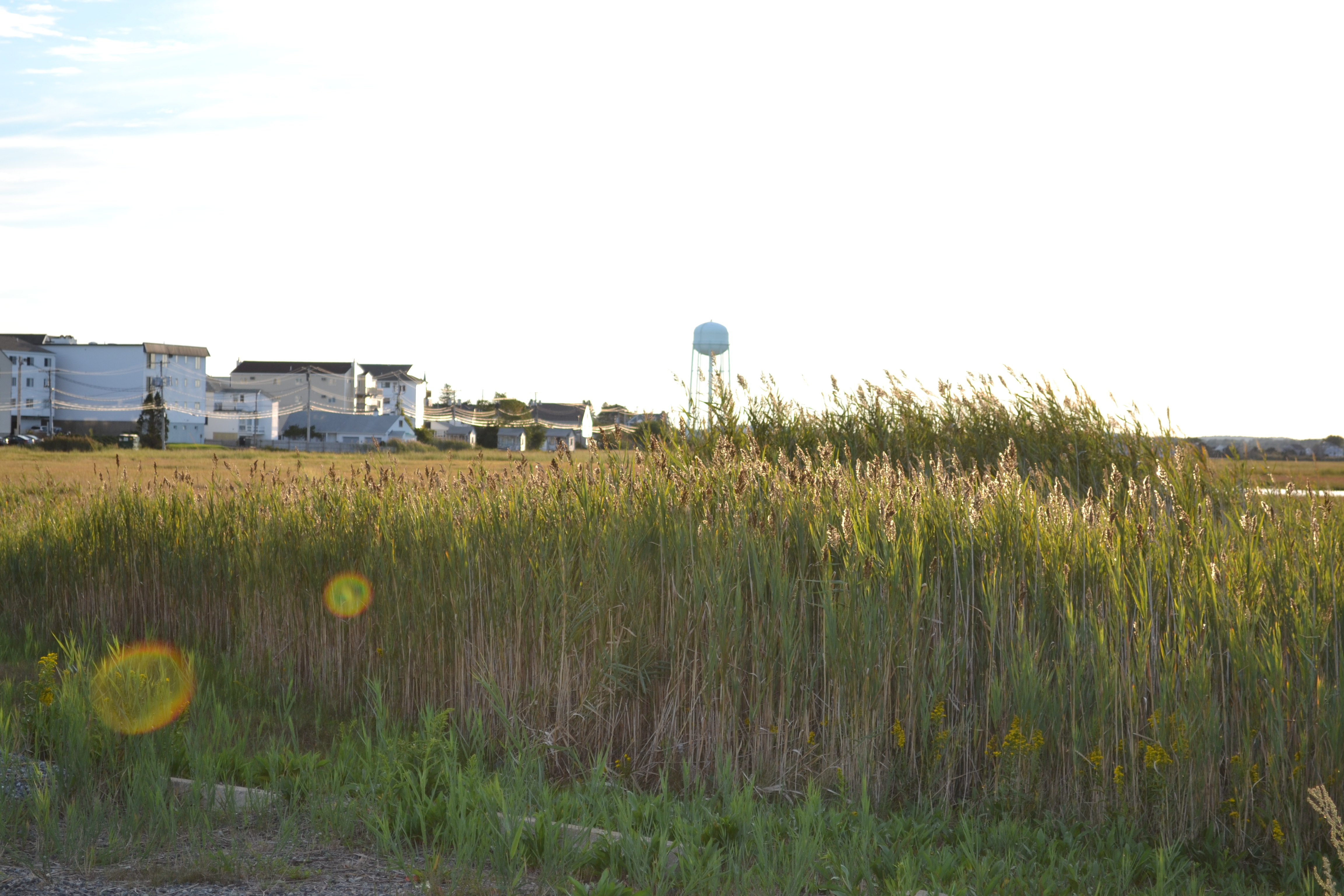
Hampton Beach (13)I took this photo towards the end of a two-week trip to New England in September 2012 . It was one of those “bucket list” trips, (even though I despise that term,) and I had spent a week in Boston shopping, visiting museums, going to Red Sox games, and eating – instantly falling in love with the city and its’ people. On the second half of the trip, I drove around northern New England – through western Massachusetts, Vermont, coastal Maine and New Hampshire – taking pictures, exploring towns, sleeping in Bed and Breakfasts, meeting interesting people.

I used to be the kind of traveler who planned trips to the most minute detail – hotels, flights, sightseeing, shopping time – but over the years, (and after several thwarted itineraries,) I began to relax and let the trip take me where I needed to go. I still make sure I have a place to stay each night – because really, who wants the stress of driving around in an unknown place looking for lodging on a rainy night, (which trust me, you do not want to do, especially in a small town in central Ireland,) but now I just open my eyes and ears to take in the world around me. Most of the time.

This photo sort of represents that idea perfectly. Sometimes I over think and analyze people, situations – just stuff in general, really – and at the moment I took this picture, none of that mattered. It was one of those instances of self-reflection where the inner critic has been silenced and I was able to just experience that moment.

I remember pulling into an abandoned parking lot next to a seafood shack that had closed for the season just to watch the sun set. There was something about the way the light reflected off the windows and the grass shifted in the breeze that caught my attention. I could hear the seagulls squawking behind me and I felt completely at peace with myself and the world around me. I had left behind a stressful sales job, crazy family, and strict routine to just be. It had taken some time to finally relax and settle into the lazy pace of driving and discovering, but once I did, it seemed to awaken something inside of me that I hadn’t felt in years – a sense of inner peace and knowing that I was okay.

Later, I headed back to the Bed and Breakfast where I was staying and drank too many martinis while getting to know a few of the locals – which to be honest – was just as enlightening as my experience earlier that afternoon.

However, I experienced no inner peace the next morning.

Fire

Prompt: What you would run out of the house with if your house caught on fire? (from “642 Things to Write About“, by the San Francisco Writers’ Grotto)

It was 3:17 am when I woke up suddenly out of a deep sleep. Again. This was the third night in a row this had happened and I figured that my brain was just registering someone next door coming home from a late work shift. Annoyed, I flipped onto my stomach to get comfortable, but then I realized tonight felt different. There was a charge in the air that hadn’t been there the past two nights. And something smelled funny. An electrical or ozone smell – like when lightening strikes close. At 3:19 am I heard a crack and a loud explosion of wood. I looked outside the bedroom window and saw the enormous 100 year old oak tree that covered as much of my house as the yard next door in which it lived, burst into flame.

I didn’t know how long I had to get to safety before the limbs weakened and fell on the roof, so I jumped out of bed and ran down the hall – hoping the cat would follow me.

I’ve always been pretty good in the dark, even though my night vision sucks. Intuitively I knew where each doorway began and ended, the number of steps to the kitchen. I reached my desk where I kept my cell phone and dialed 911. I explained that my house was about to catch on fire, hurriedly gave the operator the address, and hung up. I had nothing to do but gather what few items I could and race out the front door, hoping the fire department could save my home from total destruction.

Looking around my neatly organized space in a panic I tried to decide what to save first. The cat and rabbit, of course, needed to be escorted to safety, but after that, my mind was a total blank. Suddenly, a dead calm came over me and I realized that I had very little control over what I could rescue. If I had time to prepare – like when they issue a weather or wildfire warning – I could carefully curate the items that would fit into my old Subaru Outback. Things like handmade quilts stitched together by my deceased grandma. The recipe cards written by my other two deceased grandmas. My cookbooks – which had taken over 40 years to collect. Photos. Journals. Heirlooms. Irreplaceable items. Clothing. Toiletries. Prescriptions. Practical items.

But the flames were here now and I could smell smoke. I guessed that sparks had reached the roof and my home was beginning to smolder, possibly only seconds away from bursting into flame. I alternately cursed and grieved the neighbors tree that now threatened my home.

I slipped on a pair of old flip flops, picked up the rabbit in his cage and ran to the end of the driveway, placing him out of harms way. Quickly, I ran back inside and grabbed a  messenger bag. The smoke was thicker now, causing my eyes to water. I unhooked the external hard drive connected to my desktop computer and shoved it inside the bag with my laptop and cell phone. I scooped up the cat and raced out the front door just before I heard a large limb of the oak tree collapse on my bedroom.

My house was on fire and I heard sirens in the distance, my ability to control the situation going up in flames.